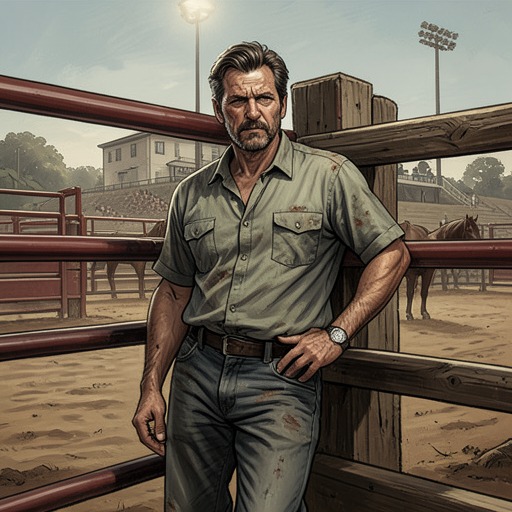
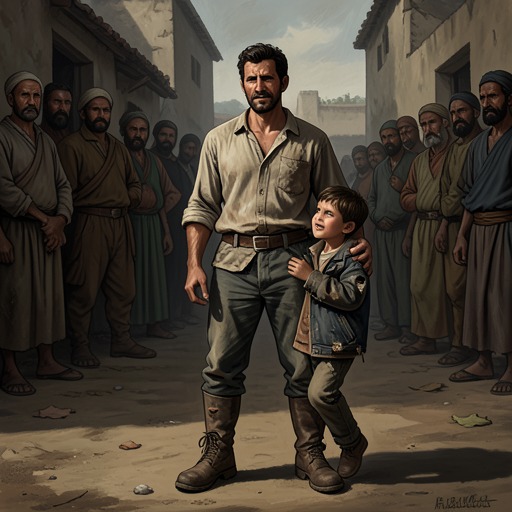
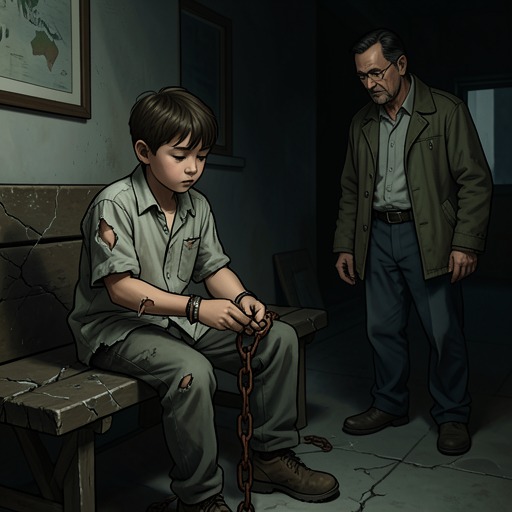
Event 1
Fire that killed Mike’s grandparents
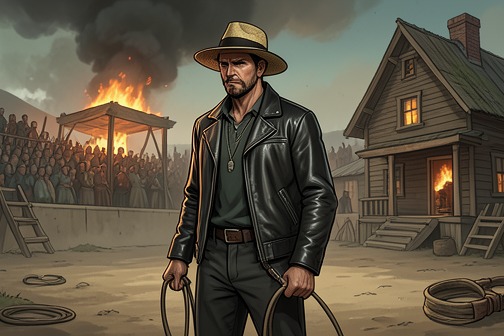
The fire that killed [Mike Milo](entity:character-recall-character-mike-milo-f71b6a270fd5)’s grandparents is a defining family loss in his past: while he is away at college, a fire destroys the smithy and the house, and both grandparents die. Its force lies not only in the deaths but in the abrupt end of a relationship whose affection had surfaced indirectly, leaving arguments unfinished and tenderness unexpressed.
## Background and Family Relationship
Mike Milo’s college years had put distance between him and his grandparents. He had gone to an agrarian college a thousand miles away, taking premedical courses as well as farriery and hippiatry. He returned lonely and unhappy after his first term, but by the end of the first year he had earned excellent grades. College began to look more promising even as home seemed worse, and he proposed modernizing the family saddlery by electrifying its forge.
His suggestion provoked his grandfather, who accused him of growing up too quickly. The narrative identifies that outburst as the closest the old man had come to saying he loved Mike Milo. In retrospect, the exchange gives their practical disagreement an emotional weight neither man had plainly voiced: the proposed change to the smithy is also part of a relationship still negotiating independence, attachment, and change.
## The Fire and Its Immediate Aftermath
At the end of his second year, just as he was about to sit his final examination, Mike Milo received a message that the smithy had caught fire the previous night. The house had burned down as well, and his grandparents were dead. The account gives no further explanation of how the fire began. Mike Milo was away from home when it happened and learned of the deaths through the message, making the news arrive at a moment when his college life and family life were still closely bound together.
The narrative moves from the news to the pain of what could no longer be repaired: unresolved arguments, unfinished sentences, and gestures of affection that had not taken place. The loss is therefore presented not as a completed farewell but as an abrupt interruption. What remains is the knowledge that another chance to speak or touch them will not come.
## Narrative Significance
The fire makes the earlier exchange with his grandfather newly legible. The old man’s anger had carried an intimacy he could not express directly; after his death, Mike Milo is left to recognize that affection through the words and gestures that did occur, while reckoning with those that did not. The sequence gives the family loss its particular shape: grief is bound to belated understanding and to the irreversibility of ordinary moments.
This private history also stands in sharp contrast with the public image Mike Milo later wears as a rodeo star. At Polk’s Cow Stadium, a large poster presents him as a triumphant cowboy, while his career is framed through competition and the performance of toughness. The fire belongs to a different register of the story, one in which loss cannot be mastered through spectacle or strength. Its continuing significance rests in the silence it leaves behind and in the emotional cost of recognizing love only when its recipients are gone.
Event 2
Anthrax outbreak and Mike’s confrontation with Croag
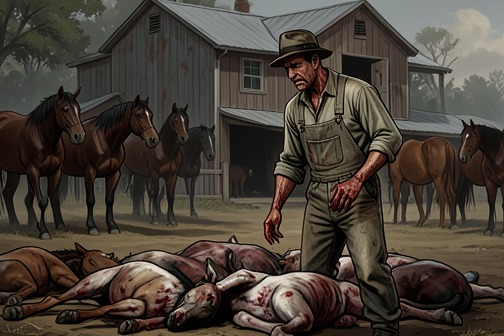
The anthrax outbreak and [Mike Milo](entity:character-recall-character-mike-milo-f71b6a270fd5)’s confrontation with [Mr. Croag](entity:character-recall-character-mr-croag-b7460d474f08) turn [Mike](entity:character-recall-character-mike-cb6fa8ab1468)’s unease about animal suffering into a decisive break with the work that has defined his life. At a ranch overwhelmed by disease, he helps destroy the infected horses under Mr. Croag’s authority. When the inspector extends that order to a healthy yearling, Mike refuses, disarms him, and strikes him. The encounter is both a moral rupture and a career turning point: Mike leaves the work and moves toward rodeo, the very world whose performance of toughness will later trouble him.
## Background and the outbreak
Before the disease appeared, Mike had already begun looking for other work. His job had brought him into contact with sick animals and with decisions about whether they were worth treating. He objected to the routine disposal of animals that might recover, especially when the rationale was that care would cost too much time or money. To him, the question was not simply how to manage a ranch efficiently; it was whether people had the right to kill dependent animals when their suffering might be relieved. The outbreak brought that private objection into direct conflict with professional authority.
The ranch stood two hundred miles from the county seat. By midnight, twenty-two horses were reported ill; by dawn, when the team arrived, the number had risen to fifty. Mr. Croag treated the outbreak as an emergency requiring eradication. He ordered the sick horses killed and the barn burned. The scale and speed of the disease left little room for the owner’s hope that the animals might survive, but the scene also made the consequences of the policy immediate: a general order had to be carried out horse by horse.
## The cull and Mike’s part in it
Mike helped the ranch owner move the healthy horses out of the barn and into the open. As the last of them escaped, Mr. Croag began shooting the sick animals. The killing continued through the day. A pit was dug with bulldozers and loaders, and the dead horses were moved into it. When Mr. Croag judged that shooting them in the barn was too slow, he changed the procedure: the remaining sick horses would be driven down the incline and killed in the pit.
Mr. Croag handed Mike a gun and directed him to take part. Mike had never killed anything before and did not know how to use the weapon. Nevertheless, he walked down into the grave among the dead horses as the first living animal was driven toward him. The scene places him inside the machinery of the cull rather than outside it as a powerless witness. Under pressure, he did what the order required. By the time the sick horses were dead, about fifty animals had been killed, and Mike had passed through an experience he had neither sought nor believed he could endure.
## The confrontation over the yearling
The immediate reversal came after the cull. A healthy yearling had panicked and fallen, breaking its leg. Mr. Croag prepared to kill it, treating the injury as sufficient reason to include the animal among the condemned. Mike drew a firm distinction between sickness and injury: the horse was not infected. He shouted a protest, seized Mr. Croag’s gun, and threw it away. When the inspector went after the weapon, Mike attacked him, striking him and pulling him close in the struggle.
This confrontation differs from Mike’s earlier compliance because he no longer accepts the category that makes destruction seem inevitable. The yearling’s injury does not, in his judgment, make it equivalent to the diseased horses. His refusal is therefore more than a burst of anger: it directly challenges Mr. Croag’s power to decide which animals may be spared. Mike turns the contamination of the cull against the inspector, rubbing the blood and disease onto him during the fight. Afterward, Mike never sees Mr. Croag again. The account establishes a permanent break between the two men without specifying any formal consequence for the attack.
## Aftermath and significance
In the fall, Mike became a stock boy at a rodeo, doing work that included roping and handling livestock. That winter he began bronco riding, and the following spring he won his first medal. His move into rodeo followed the ranch episode, but it did not resolve the conflict the outbreak exposed. The ranch job had made him confront the cost of treating animals as disposable; rodeo would place him in arenas where danger to animals and men was also made into spectacle.
The episode therefore complicates Mike’s later identity as a professional cowboy. He enters rodeo after rejecting one form of institutionalized animal killing, yet the arenas make controlled risk and domination part of public entertainment. In a later reflection on cockfighting and rodeo, he recognizes a shared language of macho heroism across men and animals forced into violent contests. That later recognition casts the ranch confrontation as an early, concrete instance of his unease, not a complete escape from the culture around it. At the same time, his defense of the yearling establishes a boundary: even after taking part in the cull, he will resist when an authority treats an injured but healthy animal as expendable.
Event 3
Mike’s fall and trampling by Tabasco
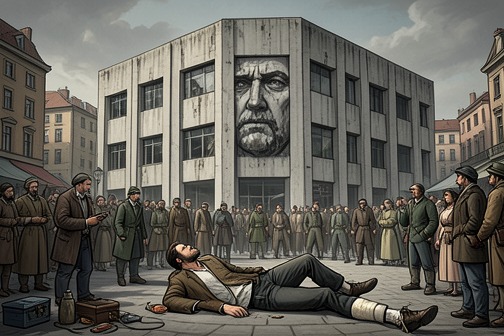
[Mike’s fall and trampling by Tabasco](entity:event-recall-event-mike-s-fall-and-trampli-740384cfd7c6) is the abrupt reversal at the center of [Mike Milo](entity:character-recall-character-mike-milo-f71b6a270fd5)’s celebrated Ride-Out: after appearing to master a famously difficult bronc, [Mike](entity:character-recall-character-mike-cb6fa8ab1468) is thrown and left unable to rise. The episode turns applause into alarm and makes the rodeo’s image of the invulnerable cowboy collide with the limits of the aging rider’s body. It also establishes the injury that sends him to the hospital, where pain, a cast, and memories of earlier injuries frame the next stage of his story.
## The Arena and the Ride-Out
The accident takes place at Polk’s Cow Stadium, where a huge banner and an enormous poster photograph of Mike present the rodeo as a public spectacle. The photograph shows him on a rearing bronc, hat aloft and wearing the fixed grin of a cowboy hero. Mike has trained himself not to notice it. Taken during his last year of competition, the image belongs to a period when he had won little money or recognition, suffered a fractured leg and a broken kneecap, and found the road between arenas and the nights in motel rooms increasingly difficult. The public likeness promises effortless command; the private history behind it is marked by injury and strain.
The stadium itself reflects [Howard Polk](entity:character-recall-character-howard-polk-b460e48b61e5)’s transformation of the rodeo into a regular entertainment. The Macmillan Brothers had brought him in to manage an arena that had struggled to draw audiences, and within two years the resident company was performing every night except Monday. [Howard](entity:character-recall-character-howard-b9b5ae3ec646)’s success did not make him popular with the cowboys. He challenged their self-image as competitive heroes, insisting that the salaried performers were actors rather than National Finals contenders. Against that background, Mike’s Ride-Out is both an athletic trial and a staged display of the very heroism Howard questions.
The announcer introduces the Ride-Out as a special event in which the rider stays on the bronc until either the man is thrown or the horse goes quiet. Mike is presented as the rodeo’s star, with three National Finals victories, the [Dallas Buckle](entity:object-recall-object-dallas-buckle-34fade18c025) for bareback riding, and nine Cattlemen Trophies to his credit. The event’s terms make its danger plain: unlike a timed ride, it continues until one of the two participants yields. Mike nods to Barrows, the chute boss tightens Tabasco’s flank strap, and the agitated horse rears and bucks before Mike mounts. Once the gate opens, the contest is underway before the crowd.
## Apparent Mastery and Sudden Reversal
The ride first appears to deliver the outcome its presentation promises. Tabasco bucks violently, but the sequence ends with the horse calm and Mike still mounted. He rides the subdued animal with deliberate ease, lifts his hand in a graceful salute, and raises his white beaver hat. The crowd understands the gesture as proof of control and answers with louder cheers. Mike’s display draws on the familiar cowboy performance: a rider appears not merely to survive a wild horse but to handle it with casual elegance.
For Mike, the victory has an immediate physical dimension as well as a public one. Waving no longer hurts his arm; the ache that had affected him is gone in that moment. He waves harder, then performs his signature flourish, throwing the hat high and riding to catch it as it falls. The crowd calls his name, and the apparent recovery of his strength becomes part of the spectacle. The sequence briefly reverses the signs of age and injury: the rider whose career has been shadowed by pain seems restored under the arena lights.
That reversal does not last. Having taken in the applause and the bottles thrown onto the field, Mike turns Tabasco toward the catch pens to leave. Just as he approaches the open gate, the horse rears and twists. Mike is unprepared and is thrown. He hears the crowd’s dismayed response and tries to get to his feet, but cannot immediately rise. Tabasco is again in motion close beside him, and the arena’s earlier celebration gives way to alarm.
People rush toward the scene from the chutes and alleyways, while the crowd stands and screams. Mike eventually gets to his knees and then stands, but he is hobbling and stumbling. He searches for his hat, drops it, picks it up again, and waves it to reassure the audience that he is all right. The gesture repeats the triumphant hat-waving of the ride, but its meaning has changed: it is now an effort to show that he can stand after the fall. The crowd answers with affection and excitement, yet Mike falls once more. This time he does not get up.
## Hospital Aftermath
The next chapter finds Mike lying still in a hospital bed. He has a cast on his leg, pain across his body as the anesthesia wears off, and no feeling in the leg. His confused thoughts briefly compare his condition with that of a crippled horse that might be put down, before he insists to himself that he is not an animal. The hospital scene confirms that the fall has ended the performance and brought him into a condition of dependence and uncertainty.
The cast also connects this accident to a longer history rather than presenting it as an isolated misfortune. Mike tries to sort out which of his injuries and casts belongs to which moment in his life; he remembers casts on his left wrist, right arm, and right leg. His mind moves among earlier injuries and relationships, including a time when [Donna](entity:character-recall-character-donna-230485550224) tried to mother him, and then toward the losses that shaped his life before the rodeo. The accident thus precipitates a disordered recollection of personal history, as physical pain and impaired sensation unsettle the distinction between present and past.
## Meaning of the Fall
[The Ride-Out](entity:expression-recall-expression-the-ride-out-9968ddc96cba) dramatizes the gap between the rodeo’s heroic image and the human cost it conceals. Mike’s poster and the announcer’s list of honors frame him as an exemplary star, while Howard’s criticism of the cowboys as performers exposes the arena’s theatrical construction of cowboy identity. Mike’s elegant salute and signature hat flourish make mastery visible, but the sudden fall shows how fragile that image is: the same horse that seemed subdued can still throw him, and applause cannot restore his ability to stand.
A later encounter with an illegal cockfight sharpens the episode’s thematic meaning. Watching the crowd praise a rooster’s bravery, Mike recognizes that the word macho has accompanied contests of animal and human violence across [Texas](entity:location-recall-location-texas-f19b16f8e87c), Oklahoma, Arizona, and [Mexico](entity:location-recall-location-mexico-6f79111cb935). He sees the heroic label beside the cruelty of the spectacle and reflects that he has given the first half of his life to arenas and would gladly give the second half as well, even while grieving that nobody wants him anymore. The fall at Polk’s Cow Stadium anticipates this conflict without resolving it: Mike’s skill remains real, but the applause that crowns it is inseparable from the danger the performance asks him and the animals to endure.
Event 4
Mike is fired by Howard Polk
[Mike is fired by Howard Polk](entity:event-recall-event-mike-is-fired-by-howard-4d7a68be0612) after returning to Polk’s Cow Stadium with his leg still healing. The encounter turns on a sharp contrast between [Mike](entity:character-recall-character-mike-cb6fa8ab1468)’s effort to conceal his physical limitation and [Howard](entity:character-recall-character-howard-b9b5ae3ec646)’s unambiguous decision to end their working relationship. Mike leaves the office maintaining the appearance he has chosen, but the dismissal catches up with him outside it, where he no longer has to hide either his limp or his shock.
## Return to the stadium
Mike has been discharged from the hospital and his cast has been removed, but he is not yet walking normally. The plaster came off only four weeks earlier, and he expects to need at least another four weeks before he can walk straight. Even so, as he heads toward the stadium and Howard’s office, he plans to hide the limp and keep his stride even. The effort is painful, but he treats concealment as necessary for this meeting.
That decision makes his arrival a performance of recovery. The difference between how he appears and how he is actually walking is already established before he sees Howard: the gait that seems unhalting in the stadium corridor is deliberately maintained, not evidence that his leg has healed. His effort to control what Howard can see cannot, however, control the conversation that follows.
## Howard's decision
Howard remains seated behind his desk, a posture consistent with his usual manner, and greets Mike by referring to his apparent recovery. Mike’s concealed limp has succeeded as a visible impression, but Howard quickly makes clear that it has not changed the outcome of the meeting. He tells Mike that he is through. The firing is delivered as a settled decision rather than as the start of a negotiation.
Mike tries to respond, but Howard lets his sentence disappear before answering. The exchange gives little space to Mike’s account of himself: Howard controls both the decision and the conversation’s terms. When Mike objects to the danger involved in the work, Howard describes the distinction he sees between an accident and a rider who takes risks deliberately to excite the crowd. In Howard’s view, that kind of purposeful risk is not something Mike will undertake. His explanation therefore concerns not only Mike’s physical capacity, but also his willingness to perform for the audience in the way Howard expects.
Howard later makes the finality personal. He says that he does not regret firing Mike and that he does not want him hanging around. The dismissal is consequently more than a change in work status: Howard explicitly rejects Mike’s continued presence. The office scene closes off the possibility that Mike might remain near the stadium while waiting for another role or for his recovery to progress.
## Leaving the office
Mike leaves without showing a limp. The concealment continues through the office door, as if his appearance can still be kept separate from the decision he has just heard. In the parking lot, however, the ache in his leg worsens, and he gives up the effort to walk normally. He hobbles there because there is no longer a reason to hide the injury from Howard.
The change in his gait marks a small but consequential shift in the scene. In the corridor and office, an even stride is part of Mike’s attempt to present himself as capable; outside, he allows his actual condition to show. This is not a recovery or a victory over the injury. His leg remains painful, and the firing has not been reversed. What changes is only the audience for his performance: once away from Howard, concealment is no longer required.
## Consequences and significance
Mike does not fully absorb the news while he is still at the stadium. The shock arrives at home, as he walks up the outdoor stairway to his apartment and recognizes that he has been fired. He understands the loss in unusually absolute terms: for the first time in his life, he feels that he has no future and is washed up. The narration thus distinguishes the formal event, Howard’s decision in the office, from its delayed personal effect, which becomes clear only after Mike has left.
The scene binds physical recovery to professional judgment without treating them as the same thing. Mike’s cast is gone, yet he is still limping; Howard notices only the apparently straight walk and nevertheless ends the employment. Nor does Mike’s effort to conceal his condition earn him another chance. The contrast between his controlled entrance and unguarded hobble outside gives the dismissal a visible aftermath, while his realization at home reveals its deeper consequence: the loss of work becomes, in that moment, a collapse in his sense of what lies ahead.
Event 5
Death of Laurie Milo
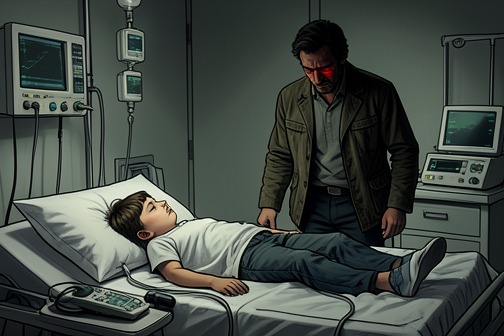
The [Death of Laurie Milo](entity:event-recall-event-death-of-laurie-milo-b51c7c697e03) is a sudden loss that transforms the family life of [Mike](entity:character-recall-character-mike-cb6fa8ab1468) and [Donna](entity:character-recall-character-donna-230485550224). [Laurie](entity:character-recall-character-laurie-6a86783f9333)’s death interrupts a growing bond with Mike and is followed not by shared consolation but by a deepening separation between her parents, whose grief settles into the quiet routines of their home.
## Background and Family Bond
Before her illness, Laurie had begun to return the affection Mike had long understood as a father’s one-way gift. Nearly six, she was described as gallant, grave, and decent, and unusually perceptive about her father’s moods: when he was troubled, she seemed to find a way to comfort him. Mike recognized that she wanted to give to him as he had given to her. Her death therefore takes not only a child from the family but also a relationship just becoming reciprocal.
## The Illness and Death
In early May of Laurie’s seventh year, Mike came home on a spring night and found her feverish. She described discomfort involving her eyes and loud noises in her head. The doctor thought it was one of the childhood illnesses and expected that it would probably be identifiable by morning, advising aspirin at four-hour intervals and bed rest in the meantime. Mike stayed up with Laurie through the night. He gave her one dose; when he began to give her the next, she had died. The sequence turns an apparently manageable illness into an abrupt and irreversible loss, without warning in the family’s immediate understanding of what was happening.
## Funeral and Aftermath
At Laurie’s funeral, people cried as her casket was lowered into the earth, including Donna. Mike did not. He also showed no tears when he turned the key and locked Laurie’s room; his grief remained unexpressed rather than absent. The gesture of locking the room marks a concrete change in the household, while the funeral exposes how differently the parents bear the loss.
Laurie’s death does not draw Mike and Donna closer. Their communication dwindles to the practical sentences needed to manage daily life, and the quiet in the house becomes a defining condition of their separation. Each is left alone with the loss, occupying what the narrative presents as an emotionally emptied home. The event’s force lies both in the child’s sudden death and in its aftermath: the family continues, but its shared life is fractured by grief that the parents do not manage to share.
Event 6
Mike leaves Donna after Rachel’s marriage
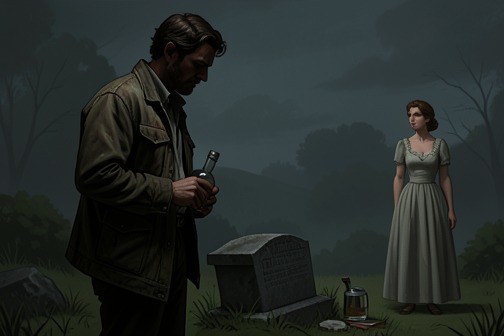
[Mike leaves Donna after Rachel’s marriage](entity:event-recall-event-mike-leaves-donna-after-74085b7717b7) in a decisive rupture that begins his “lost year.” The separation is quiet rather than angry: [Donna](entity:character-recall-character-donna-230485550224) helps him pack, and their tender parting exposes an intimacy that had not disappeared even as their marriage had become unworkable. That evening, [Mike’s grief over Laurie](entity:state-recall-state-mike-s-grief-over-lauri-1feb9fce2c0c) breaks through in a drunken outburst at her grave, giving the departure a deeper weight than a failed romance alone.
## The Marriage and the Decision to Leave
[Mike](entity:character-recall-character-mike-cb6fa8ab1468) has been worrying and delaying over whether he can change his mind before marrying Donna. Rachel’s letter, received at the stadium, says she has gone to Shreveport to think things over with her sister and brother-in-law. A month later, Rachel marries her high-school sweetheart. By the morning Mike hears the news, it is too late for his own action to affect her choice; he leaves Donna instead.
The separation is practical as well as emotional. Donna is not angry, and Mike is not angry with her. She helps him pack, reminds him that two sport jackets are still at the cleaners, and insists he take books she knows he cherishes. As he ties a rope around a damaged suitcase, she reserves a room at the hotel where he will stay temporarily. These careful acts make the departure less a quarrel than a painful acknowledgment of the life they have shared.
## The Parting and the Lost Year
At the moment he drives away, Donna kisses Mike gently, not as a husband but as a son leaving for the army. The gesture recasts their relationship at the threshold of separation: the tenderness remains, but the intimacy of marriage has altered. The narration stresses that they have not ached for each other this way in a long time, making the parting itself a return of feeling rather than a simple confirmation that it has ended.
Toward evening, drunk and caught in the rain, Mike stands on [Laurie](entity:character-recall-character-laurie-6a86783f9333)’s grave and pounds the wet earth with his feet. He yells that the child is at fault. The outburst follows his departure from Donna on the same day, but its target is his dead daughter, revealing a grief that has not been contained by time or by his adult relationships. The rain and the grave turn the day’s separation into the beginning of a much longer emotional collapse.
## Retrospective Frame and Significance
The episode is recalled through a later rainy afternoon whose fine mist resembles the rain on the day Mike left Donna. That sensory resemblance folds the past into the present: the remembered evening becomes the beginning of the “lost year,” while the present-day ache raises the possibility that another such year may follow. The return to the grave and to Mike’s accusation shows how the loss continues to structure his experience, even when the immediate subject is his separation from Donna.
The event joins two forms of loss without treating them as interchangeable. Rachel’s marriage closes off the possibility that Mike’s delayed choice might matter to her; leaving Donna ends a shared life marked by care; and Laurie’s grave exposes a wound that neither decision can settle. Mike’s departure is therefore both an ending and a threshold: the quietness of the packing contrasts with the violence of his later grief, and the day becomes the point from which his “lost year” is measured.
Event 7
Attack on Cissy Brewer at the stable
The attack on [Cissy Brewer](entity:character-recall-character-cissy-brewer-4975c8e29f12) at the stable is a turning point in the relationship between Cissy Brewer and [Mike Milo](entity:character-recall-character-mike-milo-f71b6a270fd5): an evening presented as an invitation to drink becomes an assault, and [Mike](entity:character-recall-character-mike-cb6fa8ab1468)’s belated intervention cannot prevent its lasting consequences. The episode also exposes how [Ewell Macmillan](entity:character-recall-character-ewell-macmillan-487aa1b1dee6)’s concealed resentment, Cissy’s limited memory, and the men’s competing accounts affect what can be established afterward. Its aftermath does not resolve the harm; instead, Cissy disappears, while Mike continues looking for her.
## Resentment and the Invitation
Ewell Macmillan’s hostility precedes the attack. He had taken offense when Cissy Brewer laughed at him and rejected him, but she scarcely understood rancor and did not know that he wanted to harm her. The narration makes the danger depend in part on this mismatch: Ewell’s grievance is concealed, and Mike Milo does not recognize it either. The account says that, had Mike understood Ewell’s intentions, he would not have gone with him.
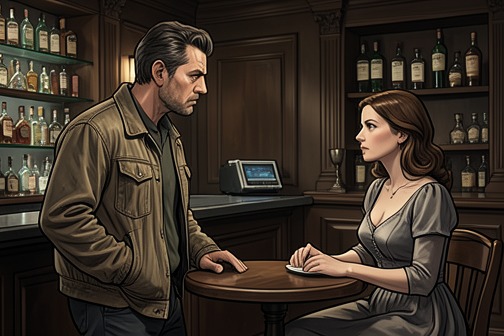
Ewell and two friends came to the [Red Rio Bar](entity:location-recall-location-red-rio-bar-f6418a3b897b) with six bottles of sour mash, presenting the drink as a new and special brand and inviting Mike and Cissy to join them. On a summer night, the five rode out to the countryside in Ewell’s cream-colored Pontiac, laughing as they went. The apparently casual outing is therefore not a neutral prelude: it places Cissy and Mike in the company of men whose intentions Mike has failed to discern, and away from the setting where Ewell first approached them.
## The Attack at the Stable
At the stable, Ewell signaled for his companions to seize Cissy and begin undressing her. Mike’s first response is described as confused: he does not yet know whether the moment calls for laughter or resistance, and initially does both. He then shouts for the men to stop. The distinction matters to the later account, because Mike’s hesitation does not amount to consent, but his attempt to intervene unfolds amid the attack rather than before it.
As the assault continues, Mike strikes out at the men. One of them hits him with a tire iron, and he falls. In the same turmoil, a horse breaks out of its stall and runs loose through the stable and into the paddock. The scene leaves both Cissy and Mike unable to stop what is happening: Cissy continues screaming, while Mike loses consciousness after being struck. The horse’s escape marks the violence spreading beyond the immediate struggle, but the central consequence is the grave harm inflicted on Cissy.
Mike regains consciousness toward dawn with severe pain on the left side of his head. The men are gone, and Cissy is nearby, more badly injured than he is. The account does not present the moment as a rescue completed in time: Mike had tried to resist, but he had been rendered unconscious, and the assault had already taken place. That gap between his protest and the outcome shapes both the episode’s immediate horror and the later question of responsibility.
## Trial and Competing Accounts
The case comes to trial about two months later, while Cissy can still barely walk. Ewell’s two companions have jumped bail and disappeared. With them absent, Ewell is able to place the blame on Lem and Burt. He claims that he and Mike tried to stop the attack and had prevented the others from killing Cissy. His account makes him an opponent of the violence rather than the person who signaled for it to begin, directly contradicting the earlier description of his role.
Cissy’s memory bears heavily on the proceedings. What she can clearly recall is Mike repeatedly telling the men to stop; she cannot supply a fuller account of the event. The legal outcome is consequently sharply limited: Mike is fined five hundred dollars, while Ewell is fined one thousand dollars and receives a six-month jail sentence that is suspended. The different penalties do not settle the conflict between the observed action and Ewell’s claim, and the two missing defendants are not tried in their absence. The trial closes a legal stage of the story without restoring Cissy or giving her a complete public account of what happened.
## Disappearance and Aftermath
Cissy disappears after the trial. Reports place her working at the wharves in Galveston, while another says that she has been arrested in the Panhandle after an incident in a movie theater. The stories are rumors, not a reliable account of her movements. Ewell uses them to argue that Cissy was worthless and had deserved what happened to her, turning uncertainty about her later life into a further means of discrediting her.
Mike does not accept Ewell’s judgment. He keeps searching for Cissy because he believes she needs help and thinks she cannot have traveled far without the means to manage a longer journey. He eventually finds her by chance at a closed hot-dog stand on the highway where Route 73 turns north, while traveling toward Fort Worth. Cissy has made a makeshift home in the boarded-up place, living in hiding. At first she does not recognize him. During his sporadic visits, she gradually remembers who he is, sometimes recalls his name, and only rarely remembers the Red Rio Bar or what he had told her there.
## Significance
The episode’s consequences extend from an act of concealed retaliation into a prolonged struggle over memory, credibility, and care. Ewell’s resentment explains the attack’s premeditated beginning; his later account and his use of rumors show how he tries to control its meaning afterward. Cissy’s inability to remember the event fully limits what she can say at trial, while Mike’s remembered protests and continued search connect the night to the later effort to find her.
The narrative does not treat the verdict as an ending. Cissy’s disappearance leaves the effects of the assault unresolved, and Mike’s eventual discovery of her provides contact rather than a simple return to her former life. Her gradual recognition of him is partial and intermittent. The attack therefore changes not only what happens to Cissy but also the terms of Mike’s responsibility: he could not prevent the violence, yet he continues to seek her out after the legal proceedings and public rumors have left her largely beyond reach.
Event 8
Howard hires Mike to bring Rafo back from Mexico
[Howard Polk](entity:character-recall-character-howard-polk-b460e48b61e5) hires [Mike Milo](entity:character-recall-character-mike-milo-f71b6a270fd5) to bring his son [Rafael Polk](entity:character-recall-character-rafael-polk-1727ec1890b3) back from [Mexico](entity:location-recall-location-mexico-6f79111cb935), setting the novel’s journey in motion through a bargain that is at once presented as a father’s exercise of visitation rights and acknowledged as a kidnapping. [Howard](entity:character-recall-character-howard-b9b5ae3ec646) offers money, a vehicle, and a legal rationale; [Mike](entity:character-recall-character-mike-cb6fa8ab1468) sees the danger to himself and, more troublingly, the possibility of violence against a child. His departure does not resolve that conflict: on the way to the border, a small missing object becomes a test of whether he is willing to carry out what he has agreed to do.
## The Visit and the Request
Howard appears at Mike’s apartment at night, standing outside the open door long enough that Mike does not hear him. Mike, alone and preparing for bed, is certain the indistinct figure in the darkness is a robber. The visitor turns out to be Howard, whose unexpected arrival shifts the scene from the immediate prospect of a break-in to a different kind of intrusion: a proposal that will enlist Mike in a dangerous act.
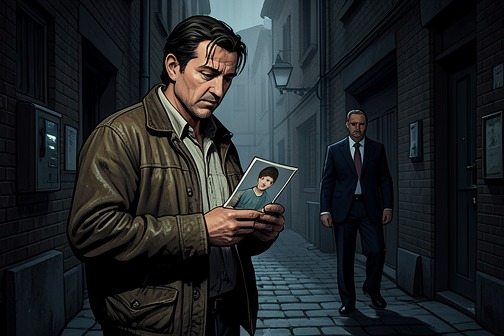
Howard asks Mike to look at a photograph. In the light, the snapshot shows a handsome, well-dressed and well-fed young boy, about six when it was taken. Howard identifies him as his son Rafael and says he is now about eleven. The photograph gives the request a human and particular object: Howard is not asking Mike to retrieve property, but to take a child from his mother. When Howard plainly tells Mike he wants him to kidnap the boy, Mike immediately asks whether this means taking him from his mother. The blunt wording strips away the euphemism before Howard can define the plan on his own terms.
## The Bargain and Its Contradictions
Howard says he has spent more than two hundred thousand dollars in legal fees and argues that having Rafael with him would cost less. He offers Mike fifty thousand dollars. Mike refuses, and Howard presses him to name a price. The size of the proposed payment is not merely a reward: Howard later presents it as a stake that could help Mike through a difficult period, establish his own business, and find a new place for himself. The offer thus combines a practical appeal to Mike’s precarious prospects with pressure to accept a job he has already identified as kidnapping.
Howard’s choice of Mike carries its own contradiction. Mike recognizes that Howard has selected him because his honesty makes him suitable for a dishonest task. Howard tries to narrow the moral and legal meaning of the operation, saying that he is not sure it is illegal and describing Mike’s role as escorting a son back to his father. But Mike’s response focuses on the likely consequences if Mexican authorities catch him: Howard, he says, would keep his own hands clean and leave Mike exposed. Howard confirms that he would have to do so at least until the boy reached the United States. The arrangement therefore places the operational and legal risk on the hired man while preserving Howard’s distance from the act.
Mike rejects Howard’s attempt to make the plan sound harmless and tells him the boy will not be brought north by him. He is angry enough to threaten to hit Howard and kick him down the stairs. Howard answers not with a changed plan but with a pointed account of Mike’s vulnerability: without money or a secure future, Mike could slide back into the damaging life of other rodeo riders. The appeal is coercive as well as practical. Howard’s fifty thousand dollars is described as a chance to recover, giving Mike a reason to listen even after he has refused.
## From Proposal to Departure
Howard’s pressure is paired with preparation. He has bought a panel truck for Mike to drive south on vacation, a vehicle chosen to look unobtrusive despite its extra power. The new truck is dark blue, conservative in appearance, and fitted with dual carburetion. Its ordinary color and enhanced performance embody the practical logic of the job: it is meant to pass unnoticed while being capable of the trip. Mike finds it pleasant to drive, a detail that makes the vehicle’s usefulness real without removing what it is being used for.
By the time Mike leaves, a day has gone by in a flurry of arrangements. He checks the truck and papers, sells his Porsche, and closes his apartment. These tasks occupy him so completely that he has not faced the moral question directly. His departure for Mexico shows that Howard’s offer has moved beyond a late-night proposal into action, although the evidence of that preparation does not erase Mike’s unresolved objections.
At dawn, Mike reaches the crossing between [Laredo](entity:location-recall-location-4bef96e6b74e) and [Nuevo Laredo](entity:location-recall-location-6e47eac9f215). Four vehicles are ahead of him, only one booth is open, and the border official and guard inspect the cars and documents carefully. Mike has spent nearly a day ensuring that his papers are in order and believes he carries no contraband. The exception is the [3-IN-ONE oil can containing Acetoform](entity:object-recall-object-3-in-one-oil-can-conta-207da71d7810), whose presence makes the crossing feel vulnerable even before the border officials reach him.
## The Missing Can and the Moral Threshold
After stopping, Mike opens the back of the truck and checks the toolbox: the oil can is gone. Recovering it would mean turning back to where he had parked, and at first the practical inconvenience seems minor. What unsettles him is that he debates whether to retrieve it. He suspects that leaving it behind may be a deliberate way of laying the groundwork for failure, as though he were creating a trail of carelessness that could make the mission collapse before he has to carry it through.
The forgotten object brings into focus what the preparations had postponed. Mike recognizes that unless he faces his responsibility, he may botch the job and leave evidence behind; he also understands that he can still withdraw before committing an act that might torment him or send him to jail. Howard has shown him divorce papers granting two months of visitation during school holidays, an arrangement Howard’s former wife has not consistently honored. That claim gives the mission a legal rationale, but it does not settle the moral question for Mike. His mind turns to the methods the word kidnapping implies: chloroform, tape over a boy’s mouth, and violence directed at a child. The hiring episode therefore ends not with a clean acceptance of Howard’s justification but with Mike confronting the possible human cost of the journey he has begun.
Event 9
Mike’s failed attempt to enter Lexa’s house
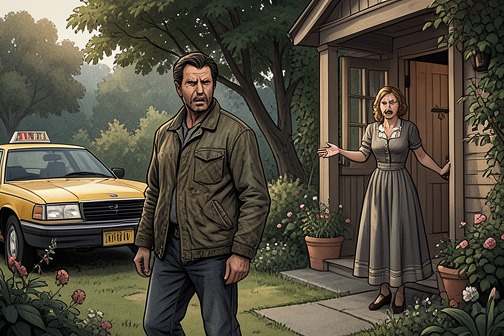
[Mike Milo](entity:character-recall-character-mike-milo-f71b6a270fd5)’s first attempt to enter [Alexandra Muños de Santis Polk](entity:character-recall-character-alexandra-mu-os-de-7b48d85a09b2)’s house is a failed burglary that nevertheless changes the terms of his mission to retrieve [Rafo](entity:character-recall-character-rafo-59c85cad733f). [Howard Polk](entity:character-recall-character-howard-polk-b460e48b61e5)’s detailed instructions give [Mike](entity:character-recall-character-mike-cb6fa8ab1468) a route in, but dogs, a police response, and a sudden bout of vertigo defeat the plan. When Alexandra discovers him, the intruder’s exposed identity and her anger turn the failed break-in into an uneasy permission to take her son.
## Reconnaissance and the Plan
Mike first approaches the house in [Lomas de Chapultepec](entity:location-recall-location-d9d4ce902bb9) by taxi, then gets out about half a mile from his destination. [Howard](entity:character-recall-character-howard-b9b5ae3ec646)’s marked street map guides him, while an auto-club map and camera make him look conspicuously like a tourist. He reminds himself to act accordingly, stopping to gape rather than appear to be watching the property. The neighborhood’s greenery and spacious houses give way to Alexandra’s especially ornate residence, set behind a high wall of red volcanic stone and elaborate iron gates.
Howard has described a second, rear entrance in an alley. Mike follows the wall until the rising pavement makes it low enough to climb, then finds the narrow private passage and the iron gate. The gate is too narrow to open from outside and is operated by an interior intercom button, details that match Howard’s diagram. Mike studies the bars, expecting the information he has been given to carry him through the next steps. Instead, two huge dogs bite his hand before he sees them. They bark and throw themselves at the gate only after he pulls away, leaving him bleeding and with a new, unanticipated obstacle. Hearing someone call from the house, he runs from the alley and escapes in a taxi.
## Improvisation Under Pressure
Mike returns to the property and tries to draw the dogs away from the back. He tests the hoods and doors of parked cars, looking for one close enough to the gate to serve his purpose; the first cars are locked, and a streetlight makes another choice risky. An old car on the side street offers the opportunity he needs. With a flashlight, pliers, pocketknife, and screwdriver, he examines its wiring briefly, then works by touch, cutting and splicing wires until the horn sounds.
The noise initially seems to accomplish nothing. Mike starts up the sloping side street, anxious that his diversion has failed, before hearing the dogs race toward the front gate. He hurries to a low point in the wall where a small opening offers a foothold. The horn and barking continue, but a siren brings a new danger: a police car turns into the street and passes him toward the commotion. Two officers get out near the car horn as spectators begin to gather. Mike slips through the light, climbs using the opening in the wall, and drops into a flower garden inside the property.
From the garden, the house appears to him as a white, storybook castle in moonlight. But the next part of Howard’s plan is wrong: there is no bougainvillea trellis to climb, and the smooth stucco offers no ledge. With the dogs potentially returning, Mike cuts two of roughly half a dozen clotheslines in a utility yard, knots them, and twists them into a lariat. Although he has not handled a catch rope for ten years, he loops it around a balcony’s metal corner post, tests his weight, and climbs over the balustrade. Having overcome two unexpected obstacles through improvisation, he is momentarily pleased with his resourcefulness.
## The Fall and the Discovery
That confidence does not carry him through the final approach. As Mike turns toward the French doors, the vertigo that has troubled him before strikes with painful force. He feels himself falling forward, hears glass crash, and then loses sensation. The account of the episode shifts into a brief passage of silence and drifting impressions before he regains awareness. His collapse, rather than the dogs or the police, ends the attempted entry before he reaches the house’s interior.
Alexandra knows who he is. On a table she has laid out the contents of his pockets: tools, flashlight, handkerchief, the [3-IN-ONE oil can containing Acetoform](entity:object-recall-object-3-in-one-oil-can-conta-207da71d7810), coins, a money clip with dollars and paper pesos, and a wallet with his tourist card, credit cards, driver’s license, and employment cards. Mike recognizes the display as evidence of his own carelessness. He had brought his identification with him, making it easy for Alexandra to identify the man who came to her house to take her son. The failure is therefore not only physical: the concealed operation has become an exposed, personal confrontation.
## Permission and the Changed Mission
Alexandra questions Mike about the assignment, and he acknowledges that he is to be paid for bringing Rafo back. She then tells him to collect her son, making clear that he need not have tried to sneak in through the back. The permission does not make the encounter a reconciliation: Alexandra speaks of Rafo with fury, rejects the image of him as a sweet, well-mannered child, and calls him a monster. When Mike asks where to find him, she says he is in a gutter. Her answer gives Mike a destination only in the bleakest sense, while revealing how sharply her view of her son differs from the idealized child suggested by the photograph.
The reversal gives the failed break-in its consequence. Mike does not get Rafo from the house, and his elaborate plan has instead put his identity and purpose in Alexandra’s hands. Yet the exchange secures what stealth could not: Alexandra’s explicit permission to collect him. The episode also punctures Mike’s confidence in Howard’s supposedly complete directions. The unmentioned dogs, the unusable trellis, the police response, and [Mike’s recurring dizziness](entity:state-recall-state-mike-s-recurring-dizzin-f499609ae531) each interrupt his design; improvisation gets him over the wall, but not safely to the doors. The mission can continue, though now under a permission hard-won through exposure rather than a successful intrusion.
Event 10
Mike finds Rafo at an illegal cockfight
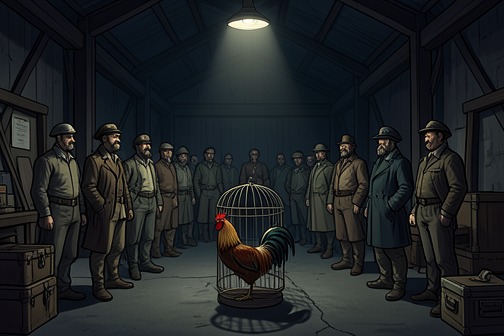
[Mike finds Rafo at an illegal cockfight](entity:event-recall-event-mike-finds-rafo-at-an-i-eaa07c23cd4b) after a nighttime search through [Tepito](entity:location-recall-location-tepito-6c2f48e9c258) leads him to a concealed gathering in a warehouse. The event turns the search for a missing boy into a dangerous encounter: [Mike](entity:character-recall-character-mike-cb6fa8ab1468) identifies [Rafo](entity:character-recall-character-rafo-59c85cad733f) among the participants, but a police raid interrupts the fight before the scene establishes what will happen next.
## The Search Through Tepito
Mike has a name, [Calle Cacha](entity:location-recall-location-calle-cacha-339a4f9845d3), but cannot place where he first encountered it. His city map provides no help; a pocket street directory locates the name in Tepito and offers no further information. The limited directions make the search uncertain from the outset.
The neighborhood is described as poor and associated with violence, and at night it is deserted. Mike spends hours walking and doubling back through alleys, but the street cannot be found where the directory indicates it should be. Of the two pedestrians he encounters, one has never heard of Calle Cacha; the other recognizes the name but is vague and hurried. Neither can guide him, leaving the search dependent on repeated attempts to interpret the neighborhood himself.
When Mike decides to return to his hotel, he cannot find a way out. The alleys seem to lead only into more narrow passages, and the surroundings offer no clear route to a wider street. His disorientation gives the search a second stake: he is no longer merely failing to find Rafo’s location but is also unable to leave the area. The thought that his isolation may have been planned belongs to Mike’s experience of being lost, not to any confirmed explanation of the neighborhood.
## Finding Calle Cacha
A shop window offers a small point of light. Mike sees that it is a shoemaker’s shop and checks its clock, which reads nine. No one inside can give him directions. Turning away from the window, he sees faded lettering on a nearby wall: Calle Cacha.
The discovery carries an irony grounded in Mike’s own recollection. He remembers having seen this alley in daylight before, and dimly recalls the same lettering, yet failed to recognize it during his search. The name proves not to mark an ordinary street: Calle Cacha is a passage narrower than the surrounding alleys and just as dark. Finding it resolves the directory’s puzzle without making the route easy or safe.
## The Cockfight and Rafo
Near a warehouse, Mike notices a narrow line of light at one of its storage stalls and hears a rooster. He moves closer, hears low voices, and peers through a canvas curtain. Inside, a smoking kerosene lamp illuminates a cockfighting ring surrounded by roughly a dozen men and six or seven boys. Their presence reveals that the apparently quiet warehouse contains an active, concealed gathering.
A man carrying a bronze gamecock calls out Rafo’s name when the boys have not yet presented their own bird for inspection. Rafo then stands and carries a white rooster around the circle. The spectators examine it in silence, after which coins and bills are placed on an oil drum as bets. The man and Rafo take opposite positions; each makes sounds to provoke his bird, and the fight begins at a signal. These actions identify Rafo not simply as present at the gathering but as a participant entrusted with handling a rooster and entering it into the contest.
Mike’s objective at this point is to locate Rafo, and the hidden fight gives him the confirmation the street search could not provide. The scene does not explain how Rafo came to be there or what he understands about Mike’s presence; its evidence is confined to his role in the gathering and Mike’s observation of him.
## The Police Raid and Interruption
Just as Mike gets a clear view of the ring, a police whistle sounds from the alley. Someone runs, a siren follows, and lights from flashlights, a motorcycle, and a police car illuminate the plaza. Mike jumps from the platform and hides beneath it as officers shout and the spectators scramble.
A kerosene lantern is thrown into the courtyard and breaks into a fire, while a policeman calls out and two gunshots follow. The fugitives heed the warning. Officers search among the courtyard’s debris, including briefly beneath the platform, but do not find Mike. They gather prisoners and begin withdrawing. The raid thus breaks up the gathering and places Mike in immediate danger, even as his hiding place allows him to remain undiscovered during the officers’ brief search.
## Significance of the Encounter
The event changes the status of Mike’s search: Calle Cacha is no longer only an obscure name in a directory, and Rafo is no longer an unknown destination. Mike has found the boy, but the discovery occurs inside an illegal gathering that is suddenly subject to police action. The shift from searching alone to witnessing the cockfight, and then hiding from the raid, makes the encounter a reversal rather than a straightforward reunion.
The scene also makes concealment central to the discovery. The street is difficult to locate, the warehouse’s light is partly screened by canvas, and Mike sees Rafo only by approaching the gathering unseen. The police intervention then changes what Mike can do with the knowledge he has gained: the evidence establishes that he has located Rafo and escaped detection in the immediate search, but does not establish the subsequent outcome of the raid or their next actions.
Event 11
Mike Takes Rafo North
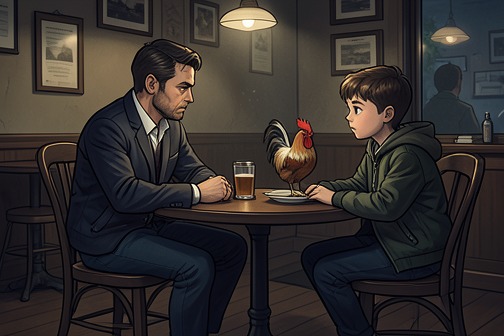
[Mike Takes Rafo North](entity:event-recall-event-mike-takes-rafo-north-d9edc53b1005) is a forced departure that becomes, through argument and resistance, a tentative choice. [Mike](entity:character-recall-character-mike-cb6fa8ab1468) tells [Rafo](entity:character-recall-character-rafo-59c85cad733f) plainly that he intends to kidnap him, but the scene gradually reveals that the boy is not indifferent to the father he disowns: beneath his streetwise suspicion is a hope that his father might still want him. The departure begins without resolving the strain between them. Rafo goes north with Mike, but in the back of the truck, alongside [Macho](entity:character-recall-character-macho-1585ee3e81c9), rather than as a willing passenger welcomed beside him.
## The proposition and its purpose
The first negotiations take place at an outdoor table at a shabby café near closing time. Mike and Rafo sit apart in their attitudes as well as their circumstances: the rooster’s leg is tied to a rung of Mike’s chair, while Rafo watches both the bird and the man who has brought him there. When Rafo asks whether Mike is really going to kidnap him, Mike confirms it. The blunt answer makes the coercive nature of the plan explicit instead of disguising it as an ordinary journey.
Rafo tests the practical logic of the abduction. He assumes Mike expects a ransom, then argues that his mother would not pay one and might send his clothes instead. The exchange establishes Rafo’s expectation of rejection within his family, as well as his quick, skeptical way of assessing what is being asked of him. Mike’s answer shifts the proposed source of money from his mother to his father. When Rafo asks who that could be, Mike repeats that his father will pay, more than a peso. The prospect changes the conversation: the father is not merely a name attached to an arrangement but the possibility on which Mike is asking Rafo to act.
Mike tries to make that possibility concrete by telling Rafo that his father wants him to live there again. Rafo’s first response is defiance, insisting that he no longer needs his father and can manage by making or stealing a few pesos. Yet he does not leave the table. After deciding that he will not go, he remains there, uncertain, and asks whether his father still has a rodeo. That question redirects the encounter. The father’s promised rodeo belongs to an earlier expectation Rafo remembers as having been broken: as a little boy, he had been told he would be taken there, but it never happened. Mike answers that the promise is being fulfilled late, and urges Rafo to regard his father as more than a liar.
## Hope, conditions, and resistance
The emotional center of the negotiation arrives when Rafo asks whether his father wants him. Mike answers that Rafo is his father’s only child. The response offers a reason for hope, but it does not erase Rafo’s caution. He sets a condition of his own: if he dislikes life there, he will leave and come back. Mike accepts the stated possibility rather than demanding that Rafo promise permanent loyalty. Their exchange therefore produces neither reconciliation nor trust in the father; it produces a limited agreement to try.
That agreement remains incomplete because Rafo’s attachment to Macho is inseparable from the decision to leave. When Mike objects to putting the rooster loose in the back of the truck, Rafo rejects the implication that Macho is an interchangeable chicken. He explains that the bird was once frightened, injured, and dismissed by others; Rafo lifted him up, cared for him, and urged him to fight. Macho’s name, in Rafo’s account, marks the change from weakness to a champion’s identity. His defense of the rooster also exposes something about Rafo himself: he recognizes a creature that has been treated as worthless and insists on the value he helped it acquire. Taking Rafo north therefore means taking Macho too, not treating the bird as disposable baggage.
When Mike tries to put Macho in a small coop, Rafo breaks it rather than surrender the rooster. The confrontation escalates into a physical struggle as each tries to control the bird and the situation. The coop is smashed, Macho gets loose, and Mike and Rafo struggle over him. This episode shows the limits of persuasion: Mike has explained the journey and Rafo has asked questions about his father, but the boy will not accept a plan that separates him from the companion he has protected. The clash does not settle the dispute by itself. Instead, it brings Rafo’s resistance and his desire to leave into sharper view.
## The decision and departure
The decisive change comes after Mike tells Rafo that he can stay and that his father will be told he refused to go. Rafo answers that he wants to go to his father. The declaration surprises Mike and, as the narration makes clear, Rafo himself; it is not a calculated bargaining position but a disclosure he had not meant to make. His earlier contempt and insistence that he needs nobody have not vanished, but they no longer conceal the wish that his father might accept him. That wish explains why the prospect of the rodeo, and the possibility of being wanted, has kept him at the table even after he said no.
Mike responds with an order rather than a fresh appeal: Rafo is to tie Macho and get into the back of the truck. He does not invite the boy to sit beside him in front. The arrangement preserves the distance between them even as it makes departure possible. Mike goes to the front without looking back; Rafo remains still for a moment, then makes a slipknot in the cord, ties it to Macho’s leg, lifts the rooster into the truck, and climbs in after him. The truck starts before Rafo has shut the second door. The sequence is abrupt, but its decisive action belongs to Rafo as well as Mike: he takes the cord, secures the rooster, and gets into the vehicle after openly saying that he wants his father.
## What the departure sets in motion
The first image of the journey is not shared conversation but separation. Rafo rides in the truck’s back with Macho, nursing his anger at having lost the struggle. He recalls that he had been living alone in the city’s alleys for two years and had thought of himself as quick and capable enough to avoid being controlled. His resentment shows that going north has not converted him into a trusting or obedient son. He has agreed to travel, but he continues to understand the encounter through pride, independence, and the immediate defeat he has suffered.
Later events give the departure a further meaning without making its initial conflict disappear. When Mike jumps onto a white mustang, Rafo watches the man hold on and feels pride in him; he privately associates Mike with the quality he had given Macho’s name. The reversal matters because the journey began with Rafo treating Mike as an adversary and a kidnapper. It suggests a developing respect, not a sudden erasure of their unequal position. Likewise, Rafo’s later attachment to the language of strength stands beside Mike’s increasingly troubled view of the violence celebrated in arenas. After seeing Macho fight, Mike connects the spectacle of animal combat with the arena culture in which men seek to prove their courage through domination. These later reflections place the departure within the novel’s wider scrutiny of macho ideals: the trip begins through force, but its human possibility lies in care, vulnerability, and the boy’s still-unextinguished longing for his father.
Event 12
Escape from the Highway Roadblock
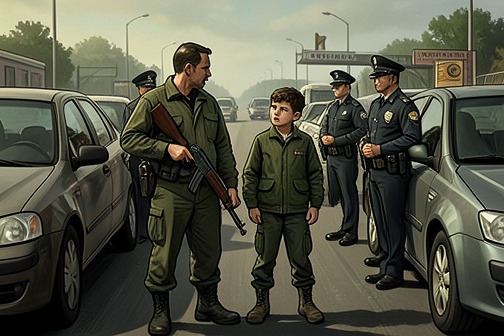
[Escape from the Highway Roadblock](entity:event-recall-event-escape-from-the-highway-f2f2421c3462) is the moment [Mike](entity:character-recall-character-mike-cb6fa8ab1468) and [Rafo](entity:character-recall-character-rafo-59c85cad733f)’s journey north becomes an escape from official scrutiny. Faced with an armed search focused on drivers and passengers, Mike must conceal his alarm, bring Rafo back to the truck, and abandon the highway without knowing whether the authorities are looking for them. The diversion saves them from the immediate checkpoint but leaves both travelers confronting the possibility of jail.
## Causes and Background
Mike encounters the roadblock while driving north, about three-quarters of the way to [San Luis Potosí](entity:location-recall-location-san-luis-potos-1d3b3ce49b86). The interruption gathers force gradually: traffic slows, then stops altogether, and a single file of cars stretches hundreds of yards ahead. Drivers have left their vehicles to see what is happening. Mike gets out and wonders whether to walk to the front, but, knowing no Spanish, he cannot readily ask the other motorists what has caused the delay. At last he ambles forward as inconspicuously as he can.
The obstruction is an official checkpoint, not a traffic accident. At the head of the line, a national patrol car and a police motorcycle barricade the road. A policeman and three armed national troopers search the stopped cars. Mike notices that their attention is directed less toward the vehicles than toward the people inside them. The distinction changes the meaning of the scene: the danger is not simply that his truck might be inspected, but that he and Rafo might be identified.
Mike considers that the authorities could be looking for a boy, though he cannot know that this is their purpose. His suspicion connects the checkpoint to [Lexa](entity:character-recall-character-lexa-1521cc2d7624)’s earlier threat to keep watch over him. He has seen no sign of [Pacas](entity:character-recall-character-pacas-99e3cc97eb24) for several days and has even forgotten about him, but now recognizes that Lexa never specified who would monitor him. The possibility makes him reassess how seriously he should have taken her warning; it does not establish that Pacas or Lexa arranged the roadblock. The uncertainty itself is what makes the search dangerous: Mike has to act without knowing what the officials know.
## Recognition and Reunion at the Truck
Mike feels an urge to run back to the truck, but resists it and keeps walking. As he approaches, he sees Rafo coming toward him. The sight sharpens the immediate risk: if the officials notice the boy, Mike’s attempt to take him away could be exposed. He keeps his pace steady rather than letting his anxiety show.
When Rafo gets close enough, he asks why the traffic has stopped. Mike answers that he thinks Rafo is the reason, then responds to the boy’s concern that he might be in trouble for stealing a rooster. Mike knows the more serious word—kidnapping—is too dangerous to whisper there. Instead, he points to the truck and quietly orders Rafo to get in. The command brings their conflict over Mike’s authority into the open: Rafo turns toward him, ready to resist, but a policeman’s sharp whistle from the front of the line changes the balance. Rafo hastily climbs into the back.
## The Turn Off the Highway
Mike starts the engine but does not drive off at once. He has to judge whether they are far enough from the barricade to escape notice, and the text leaves that judgment uncertain. He backs up a few feet, coming close to the car behind him, turns the wheel outward, and begins a U-turn on the highway. The maneuver is improvised in the stalled line, where the stopped traffic both obstructs him and gives him a moment to attempt the turn.
A commotion in the back of the truck follows. Rafo is suddenly standing beside Mike, close enough for Mike to feel his breath at his neck, and asks what he is doing. Mike tells him to get off the main road and use the back roads. Rafo objects that the route will be rough; Mike answers by setting the discomfort of the bumpy road against the more frightening prospect of jail. Their exchange makes the choice plain without resolving whether either of them will actually be arrested.
Once they are well away on a dusty back road, the truck jolts along exactly as Rafo predicted. The physical cost of the escape is immediate and concrete: the smoother highway has been exchanged for a road that bumps beneath them. Only after they are underway does Rafo more openly reveal his anxiety, asking whether Mike thinks he will go to jail. Mike admits that perhaps both of them will. Their escape, then, is not a declaration that the danger has passed; it is a move away from the checkpoint into a less certain situation.
## Consequences and Narrative Significance
The episode turns a journey north into a partnership under pressure. Mike makes the decisive choices—returning to the truck without running, summoning Rafo without naming the peril aloud, and turning away from the highway—while Rafo’s presence makes those choices harder to conceal. Their exchange also shows that the authority between them is not settled: Rafo is prepared to dispute Mike’s command, yet responds when the whistle makes delay dangerous.
The scene’s tension depends on divided knowledge. Mike sees the officials examining people and suspects the boy may be their target, but the reason for the search remains unconfirmed. He cannot question the other drivers in Spanish, cannot safely name kidnapping, and cannot be sure the truck is beyond notice. The brief, practical directions and the rough road carry the action forward where certainty is unavailable. By the time Rafo asks about jail, the escape has succeeded only in the narrow sense that they have left the blocked highway; their fear, and the possibility of pursuit, travel with them.
Event 13
The Truck Hijacking
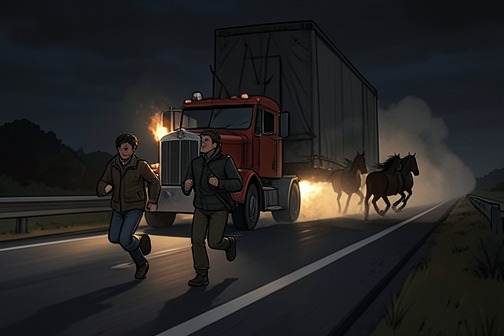
[The Truck Hijacking](entity:event-recall-event-the-truck-hijacking-2aa4a7b1e823) strips [Mike](entity:character-recall-character-mike-cb6fa8ab1468) and [Rafo](entity:character-recall-character-rafo-59c85cad733f) of their transportation and most of their money in a sudden roadside theft. The men’s failure to stop the truck matters as much as the theft itself: they return to camp with [Macho](entity:character-recall-character-macho-1585ee3e81c9), stranded, and discover that their remaining provisions offer little security. Against the public image of Mike as a rodeo champion, the episode reduces the pair’s immediate prospects to a few cans, fruit, water, and a handful of coins.
## The theft at the camp
Mike and Rafo are near the road when they see one of three men trying to capture Macho with a sombrero. Rafo calls out, interrupting the attempt to take the rooster. The man stops pursuing Macho and shouts toward his companions; Mike then sees the others, including one mounted beside the truck and another inside it, trying to start the engine. The man pursuing Macho addresses the driver as Carlos. The evidence presents the theft as unfolding around them, not as a confrontation they have prepared for.
The truck starts moving. The man with the sombrero gets onto one of the horses, and the three horses depart with two riders while the truck gathers speed behind them. The horses are already far ahead when the vehicle begins to pull away. Mike and Rafo run after the group, shouting, but the distance grows rather than closes. Their pursuit ends without recovering the truck or intercepting the thieves. The attempted capture of Macho and the theft of the vehicle thus converge in one brief sequence: Rafo’s shout draws the men’s attention, but it cannot prevent their escape with the truck.
## Stranded and counting the loss
After the chase, Rafo runs out of breath and stops; Mike, who has run farther ahead, eventually slows and stops as well. They walk back to camp to collect Macho, and only then confront what the theft means: they have no truck and are stranded. Rafo allows for the possibility that they might get the vehicle back, but the suggestion of calling the police exposes their lack of an easy remedy. He reflects on the contradiction of needing the police in some situations while wanting to reject them in others. Mike answers lightly, but his attention is elsewhere: he is looking around for his coat.
Remembering that the coat was in the truck changes the scale of the loss. Mike’s money was in its pocket, and when Rafo asks whether he means all of it, Mike confirms that he does. He searches his trousers and finds only one peso and fifty centavos, a total worth twelve cents. Rafo has nothing left from the money he collected from Zafiro; he spent it on cigarettes the day before. The theft has therefore taken more than a means of transport: it has carried away Mike’s cash and left both travelers with almost no money available to them.
## What remains
Their supplies make the consequence tangible. Once packed, they have an unopened can of refried beans, a can of tacos, two cherimoyas, half a gallon of spring water that may not be purified, and one and a half pesos. The list does not turn their predicament into a catastrophe beyond what the episode states, but it does show how little margin they have while stranded. Even the water’s uncertain quality is part of the inventory, rather than a dependable resource. The balance between what they have lost and what they can carry is stark: the truck and Mike’s money are gone, while the remaining provisions can be counted item by item.
The exchange about cigarettes briefly restores their familiar teasing without changing their circumstances. Rafo acknowledges that Mike outran him, then attributes the difference to Mike’s longer legs rather than to smoking. He puts a cigarette in his mouth but does not light it, leaving it dry and dangling. His earlier spending has already helped reduce his cash to nothing, and the unlit cigarette becomes a small, visible counterpoint to that loss. Rafo also says that his hat is too big, although he is wearing no hat and apparently owns none. The remark sits beside the careful reckoning of food, water, and coins: humor persists, but it cannot make their supplies or money stretch further.
## Significance
The theft reverses the scale on which Mike’s life has often been measured. At Polk’s Cow Stadium, his photograph showed him on a rearing bronc, and the announcer presented him as a champion with major rodeo honors. [Howard Polk](entity:character-recall-character-howard-polk-b460e48b61e5), meanwhile, dismissed the company’s self-image as cowboy heroism and called its performers actors. Those details make the contrast legible without making the hijacking itself a staged test: here, Mike cannot turn reputation into transport, retrieve the coat, or protect the money in it. He and Rafo are left with the practical consequences of a failed pursuit.
The episode also places the language of toughness beside material vulnerability. Mike’s later reflection on the word macho connects rodeo and cockfighting to spectacles in which people and animals are made to hurt one another; he recognizes that the hero’s pose can conceal cruelty and loss. That broader judgment does not change the immediate outcome of the hijacking, but it sharpens the contrast between public bravado and dependence on ordinary resources. After the truck disappears, what counts is not the arena image but the small remainder they can carry away from camp.
Event 14
Takeover of the Chicken Bus
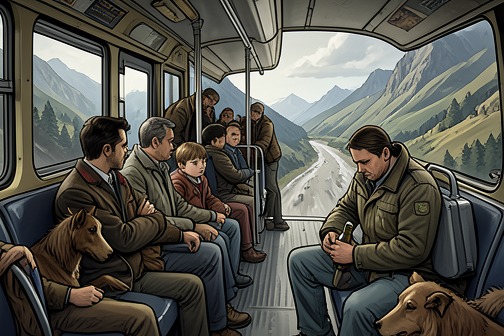
The [Takeover of the Chicken Bus](entity:event-recall-event-takeover-of-the-chicken-1b746f1d0194) is a nighttime emergency in which [Mike Milo and Rafo](entity:relation-recall-relation-mike-milo-and-rafo-0ec84f3f29aa) wrest control of a passenger bus from its dangerously drunk driver. Their intervention prevents the driver from continuing along a perilous mountain road, but the decisive turn comes when [Rafo](entity:character-recall-character-rafo-59c85cad733f), not [Mike](entity:character-recall-character-mike-cb6fa8ab1468), gets the bus moving again and takes responsibility for driving. The episode shifts the pair from passengers at the mercy of events to collaborators who must trust one another under pressure.
## Background and Escalating Danger
The crisis develops during a bus journey toward [Janasco](entity:location-recall-location-janasco-173a394c3e1f). Its passengers share the crowded vehicle with an assortment of animals and supplies: a pig is hemmed in between seats and large Pemex cans, three hens are kept in a string bag above the aisle, and goats are tethered by a window. [Macho](entity:character-recall-character-macho-1585ee3e81c9), Rafo’s rooster, briefly struts through the bus before settling beneath a seat. The animals’ apparent calm contrasts with the danger that soon overtakes the passengers.
As the road becomes steeper and its turns sharper, the driver pays increasingly more attention to a bottle of tequila than to the route. The bus loses momentum on uphill stretches while the driver struggles to change gears, and it lurches dangerously on the descents. The passengers try to reassure one another with laughter and stories of worse journeys, but their gestures—kissing children, holding crucifixes, and crossing themselves—show how little confidence those efforts can conceal.
By nightfall, the danger has intensified. The driver is completely drunk, and the dark makes the twisting road and its drops still more perilous. His mood shifts into elation: he behaves as if he can master the road and carry the bus through space toward Janasco. His exhilaration does not make him safer; it widens the gap between his confidence and the risk faced by everyone aboard.
## Mike and Rafo’s Intervention
Mike quietly communicates a plan to Rafo. Rafo initially gives no sign that he understands, and Mike briefly reads his expression as slowness. He then recognizes that Rafo has grasped the plan but is alarmed by it. That moment complicates Mike’s view of the boy: Rafo’s usual arrogance has not disappeared, but the immediate danger makes his unease visible. He recovers quickly and leaves his seat.
Rafo goes alone to the front of the bus and makes a friendly gesture toward the driver. He stands by the windshield, looking at the headlights on the dark road, until the driver seems no longer to register him. Mike then moves into the empty seat behind the driver. The two take up positions that allow them to act without announcing the plan: Rafo is at the front, while Mike waits behind the driver. When Mike gives the agreed signal, Rafo grabs the steering wheel and holds it to the road as the driver reacts angrily. Mike pulls the emergency brake, bringing the bus to a shaking stop. The passengers cry out, thinking the bus has crashed, and luggage spills from the racks.
## The Struggle and Change of Driver
The driver turns on Rafo, and Mike intervenes. A struggle follows between Mike and the driver, who presses the fight even after Mike has brought him down. Mike’s immediate purpose is to take the driver out of control of the situation long enough for him to sober up, rather than to kill him. The encounter leaves Mike occupied with restraining the driver, so the apparent resolution is only partial: the bus has stopped, but no safe driver has yet taken charge.
Mike notices that the bus is moving again and at first wonders whether his recurring dizziness is making him misread what is happening. He looks toward the front and sees Rafo driving. The boy keeps his eyes on the road when Mike calls for him to stop, and answers that Mike should not worry. Rafo’s action is more than a continuation of the original plan. He has taken control of the vehicle himself, making a judgment that the passengers need a driver more than they need to remain stopped beside the road.
The passengers’ response changes the atmosphere aboard the bus. An old man begins cheering Rafo, and other passengers join in. Rafo briefly acknowledges their applause with a wave, and the bus veers slightly when he takes his eyes from the road. The cheering registers relief and approval, while the small swerve also makes clear that driving the bus remains a serious responsibility, not a triumphant game. The driver’s eventual permission and grudging approval confirm that Rafo is allowed to drive, though that concession follows rather than initiates the boy’s assumption of control.
## Aftermath and Significance
Hours later, toward dawn, Rafo willingly gives the driving over to Mike so he can rest. He does not actually sleep: the drunken driver is snoring in the aisle near him, and Rafo keeps watch. His vigilance shows that the takeover has not erased the danger or his awareness of the man they subdued. Control has shifted, but the journey still requires care.
Rafo privately considers how he and Mike overcame the driver. He can recognize the value of Mike’s plan and his effectiveness in the fight, but resists giving the older man all the credit, insisting in his own thoughts that much of it belongs to him. He also connects the outcome to his Ave Marias. The episode therefore gives Rafo both a practical achievement and a claim to agency: he follows the plan, helps stop the bus, then drives it himself. Mike and Rafo’s cooperation is real, but neither their different contributions nor Rafo’s pride in his own role is dissolved into a simple victory for Mike.
The episode’s central reversal is from helplessness to shared, if temporary, control. At first, the passengers can only brace themselves while the driver’s recklessness governs the road. Mike’s plan interrupts that danger, but it is Rafo who turns the stopped bus into a moving one and earns the passengers’ acclaim. By dawn, he can hand the wheel to Mike by choice. The change does not make the road safe; it shows the two travelers beginning to act as partners in a crisis.
Event 15
Recovery of Mike’s Truck in Janasco
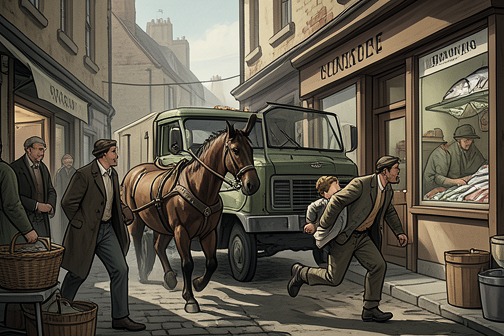
The recovery of [Mike](entity:character-recall-character-mike-cb6fa8ab1468)’s Truck in [Janasco](entity:location-recall-location-janasco-173a394c3e1f) is a brief reversal in Mike and [Rafo](entity:character-recall-character-rafo-59c85cad733f)’s flight: they regain their vehicle and the papers inside it, but not their money, and leave [Macho](entity:character-recall-character-macho-1585ee3e81c9) behind as they escape. The episode turns a chase into a public street fight, then into an uneasy encounter with local authority. Its outcome is practical rather than complete: Mike can drive on, but the loss of cash and the separation from the rooster remain unresolved.
## The Truck Appears
Mike and Rafo spot Mike’s northbound truck circling the perimeter of Janasco’s plaza. The vehicle is followed by three horses, now riderless and tied to its rear bumper. The sight brings the pair running toward a side street as the truck turns away from the plaza. At this point they are pursuing not simply a vehicle but the means of continuing their journey; the horses trailing it also make clear that the thieves have taken more than the truck.
The men in the cab do not hear the pursuers over the vehicle and hoofbeats. They travel up one block, turn onto the main street, and stop outside a fishmonger’s shop. The delay gives Mike and Rafo time to catch up. Their arrival is abrupt: Mike grabs Carlos, turns him around, and strikes him before the thieves realize they are under attack. What follows is not a planned recovery operation but a rapidly changing struggle in the street.
## The Fight Outside the Fishmonger’s
Ito tries to get back to the truck, but Rafo trips him and keeps him from escaping. Mike is occupied by Carlos and Miguel, who attack from opposite sides. Rafo then moves in to help, but Carlos gets control of him and holds his arm behind him. Rafo breaks free by knocking over one of the fish stands. The scattered fish leave the pavement slippery; Rafo uses an eel from the stand to drive Carlos off. The disruption gives Mike time to deal with Miguel, while the shopfront and its goods become part of the contest rather than a neutral backdrop.
Carlos runs for the horses. Mike goes after him, but Rafo slips on the fish and blocks the pursuit. Carlos mounts one of the animals and rides away; because all three horses are tied together, they move off as a group. The thieves’ escape is therefore partial and disorderly: one man gets away with the horses, while the others remain by the truck. The sequence also divides Mike and Rafo’s immediate priorities. Rafo has helped prevent the thieves from simply driving off, but the struggle has scattered the group and opened a route for Carlos to flee.
Mike turns to Miguel, who is still at the scene, and demands the money taken from him. Miguel insists that he has none and turns out his pockets to support the claim. The episode establishes a clear limit to the recovery: Mike can regain the vehicle, but the cash is not returned. When the police officer begins asking what caused the fight, Mike’s account is complicated by the damage to the fish stand, the stolen truck, and the fact that the theft had not been reported. Recovering the vehicle does not make the encounter simple in the eyes of the authorities.
## Papers Recovered, Money Missing
During the questioning, Mike realizes that his money and identification had been together in his coat. The papers matter because they include his driver’s license, vehicle registration, and tourist card, the documents that could establish who he is and support his claim to the truck. He tells Rafo to look for the coat, but Rafo is already searching the back of the vehicle. Among the blanket, sleeping bag, and Mike’s broken suitcase, he finds it.
The identification is intact, but there is no cash. Rafo passes Mike the wallet; Mike selects the registration and hands it to the officer. The officer looks at the document without understanding its contents, yet accepts its existence and returns it. This small exchange resolves one practical danger without repairing the loss: Mike has the papers needed to identify the vehicle, but he and Rafo still have no recovered pesos or dollars. The coat’s return restores evidence of ownership, not the resources that were taken.
The officer’s attention turns to Ito, who is coming around on the ground. The man appears to recognize the officer, and the two exchange smiles before the officer kicks him and leads him away. Onlookers laugh and applaud the departure. The scene offers no assurance that the thieves’ actions will be handled through a neutral or formal process; instead, the officer’s personal familiarity with Ito and the crowd’s response shape the public aftermath. Mike does not remain to learn what follows. As soon as he can, he starts the truck and drives away from the main street.
## The Cost of Getting Away
Only after the vehicle is moving does Rafo ask where Macho is. In the rush to pursue the truck, both of them had forgotten the rooster in the [Janasco Zócalo](entity:location-recall-location-janasco-z-calo-55b1600b4990). The recovery thus ends with a consequential omission: Mike and Rafo have their transportation and Mike’s papers, but their escape separates them from the animal Rafo cares for. The truck’s return is not a clean restoration of what they had before the theft; it leaves a new problem behind in the town they are fleeing.
The episode’s structure makes its reversal deliberately incomplete. The truck’s appearance initially promises the return of what was stolen; the street fight secures the vehicle but allows Carlos to escape with the horses, and the search of the coat recovers documents but not money. The police officer’s questions then add another complication before Mike chooses departure over further delay. Each gain is paired with a remainder: the truck is back, but the cash is gone; the papers survive, but Macho is left behind.
That imbalance fits the novel’s broader attention to the costs concealed by masculine performance and force. In Mike’s earlier rodeo career, a banner and poster present him as a public cowboy hero, while [Howard](entity:character-recall-character-howard-b9b5ae3ec646) describes the salaried performers as actors rather than champions. Later, watching a cockfight, Mike recognizes the violence attached to the word macho and grieves that the arenas have made cruelty into entertainment. The Janasco fight is not itself a rodeo spectacle, but it places Mike and Rafo in another improvised contest where physical force can recover a vehicle without restoring everything taken. The episode advances their journey through action, yet refuses the triumph of a complete victory.
Event 16
Capture of the White Mustang
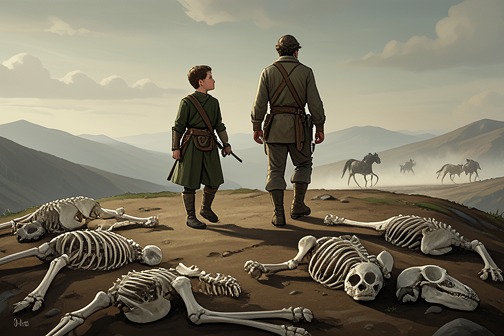
The [Capture of the White Mustang](entity:event-recall-event-capture-of-the-white-mu-4f5d457fe4c4) is the first successful pursuit of a wild horse by [Mike](entity:character-recall-character-mike-cb6fa8ab1468) and [Rafo](entity:character-recall-character-rafo-59c85cad733f) on the [Janasco mesa](entity:location-recall-location-janasco-8b919b708530). Its importance lies not only in Mike’s physical feat: Rafo drives the truck that brings him within jumping distance, and the shared danger and success alter the boy’s view of the man he had distrusted. The horse is caught, but not made docile; the episode’s triumph is real and provisional, like the new confidence between its human participants.
## Before the Herd Appears
The capture follows an apparent dead end. Mike and Rafo have reached an immense, sparsely vegetated plateau, but their search has produced no living mustangs. Instead, they find scattered skeletons, including a group of perhaps fifty or sixty animals across the desert. Mike takes this evidence as confirmation that no wild horses remain. His disappointment is sharpened by the practical limits of their journey: without money, food, or gasoline, they could not have made better progress northward, and the mesa’s beauty offers no substitute for the horses they had come to find.
The expectation changes when Mike and Rafo are together in a small enclosed space on the mesa. They hear a series of neighs, then see three mustangs faintly against the moonlit horizon. The animals disappear from one sweep of sky and reappear across another; soon a larger herd is moving across the horizon. The sight overturns Mike’s conclusion that the mesa holds no living horses. The animals have not been waiting in a convenient group, however, and their brief appearance becomes a test of whether the men can respond quickly enough to follow them.
## The Pursuit Across the Mesa
When several horses return over the horizon, a white mustang charges toward Mike and Rafo before stopping and turning. The herd gathers behind it. Mike immediately sets out a division of tasks: he will start the truck, Rafo will get inside and drive, and Mike will climb onto the vehicle. Rafo initially resists the assignment, but then jumps behind the wheel. He presses the accelerator without putting the truck into gear, making the engine run while Mike climbs onto the hood and then the roof to lie flat.
At Mike’s direction, Rafo switches on the headlights and drives. The truck first veers as Rafo handles it, then steadies and crosses the uneven mesa toward the herd. The light and vehicle startle the horses: they scatter, and Mike directs Rafo to follow the white one. Rafo keeps the truck in pursuit as the mustang changes direction and runs away from them. Mike calls for the truck to draw closer, judging the distance for a leap while it keeps pace with the animal.
## Mike’s Leap and the Capture
When the truck is alongside the white mustang, Mike stands ready and then jumps from the vehicle onto the horse. The mustang continues running with Mike on its back, then rears and tries to throw him. Mike holds on. As the horse begins to run in arcs rather than a straight line, its speed decreases; the shift gives him a chance to stay mounted. At last the animal stops, paws at the sand, and remains still. The capture depends on two different kinds of control: Rafo’s driving gets Mike within reach, while Mike endures the horse’s attempt to dislodge him.
The moment is not a simple transformation from wildness to obedience. The mustang is angry and unsettled, and soon begins moving restlessly again. The truck also stops at a distance, and Rafo runs toward Mike. His response makes clear that he understands what the two of them have accomplished: he celebrates the ride and tells Mike that he now sees that a wild horse can be ridden. Mike, in turn, acknowledges that Rafo handled the wheel well. Their praise is mutual, and the boy’s role is not reduced to that of a witness. The capture is Mike’s ride, but its execution has depended on Rafo’s participation.
## A Shared Achievement and Its Limits
For Rafo, the experience differs from the horse events and performances he has seen at the Hipodromo and the Charreadas. Those involved showmen and trained horses; this encounter has been with a living wild animal, and Rafo has been part of the effort to catch it. His joy rests partly on that distinction and partly on Mike’s recognition of his driving. The compliment becomes evidence that Mike trusts his ability in a task that required speed, judgment, and cooperation.
The change in Rafo’s attitude finds expression in the name [Macho](entity:character-recall-character-macho-1585ee3e81c9). He applies the word to Mike, a man he had not previously thought of in those terms, and is surprised by how deeply the word feels to him when said quietly. In this scene, it marks an emerging respect grounded in action rather than in a public performance of toughness. That meaning is not uncomplicated across the novel: when Mike later sees a cockfight, he considers how the same ideal can celebrate cruelty in arenas. The capture supplies a more intimate contrast, as Rafo’s admiration grows out of shared effort rather than the spectacle of an animal being made to suffer for entertainment.
The success does not make capturing more horses easy. On a later attempt, the herd is absent throughout a day and night, and a group of four that the men find on their third day in [Janasco](entity:location-recall-location-janasco-173a394c3e1f) runs apart before Rafo can bring the truck close enough. Mike decides that the next attempt should use ropes. In retrospect, the first capture is a singular opening rather than a repeatable method: it brings Mike and Rafo together in a moment of trust, but neither the horses nor the terrain submit to their plans.
Event 17
Macho’s Cockfight Victory
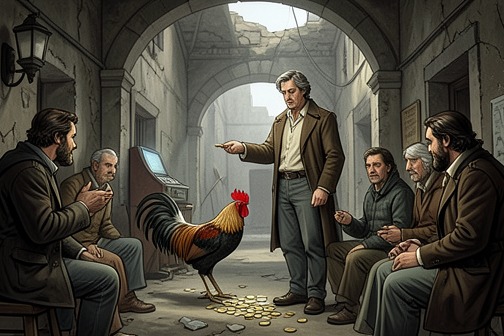
[Macho’s Cockfight Victory](entity:event-recall-event-macho-s-cockfight-victo-982707f7e6a8) is a turning point in which [Rafo](entity:character-recall-character-rafo-59c85cad733f)’s rooster wins a brutal contest, but the victory quickly acquires a human cost. The fight tests Rafo’s resolve and [Mike](entity:character-recall-character-mike-cb6fa8ab1468)’s ability to protect him without taking every decision out of his hands; afterward, the winnings bring into view the livelihood behind the spectacle and complicate any simple celebration of triumph.
## The Ruined Arcade and the Challenge
Mike and Rafo enter a dark arcade without initially noticing it. [Macho](entity:character-recall-character-macho-1585ee3e81c9), who is ahead of them, behaves in an unfamiliar, agitated way, responding to a crowing sound that the two humans soon hear as well. He moves toward it, and the passage draws the travelers into a ruined corridor of old stone columns and fallen rubble. What first seems a dead end proves to be a false one: beyond a turn, candles reveal a cockfight that has already ended. A large gray rooster lies dead, while the victorious black gamecock struts nearby.
The spectators, roughly ten or twelve men, are occupied with dividing the betting proceeds and do not immediately notice the newcomers. When they do, [Porfirio](entity:character-recall-character-porfirio-59f253f0d09e) recognizes Mike and Rafo; he is the elderly man who had previously tried to sell them a mustang. Macho begins moving toward the black gamecock, and Rafo quickly scoops him up. Porfirio asks whether the white rooster is to fight. A woman with the defeated bird studies Macho, Rafo, and Mike before accepting the challenge. Her consideration makes the encounter more than an incidental test of the rooster: Rafo and Macho are about to enter a contest arranged by people who know its risks and its customs.
## Choosing the Terms
The men place wagers with Porfirio, who serves as referee. The stakes are modest, consisting of pesos and centavos, but the spectators press to take part. Before the fight, each rooster is prepared separately, with its feathers smoothed and the bird kept from seeing its opponent so that its aggression is not spent prematurely. The preparation is communal and deliberate, contrasting with the sudden violence of the match itself.
The contest becomes uncertain when the other side’s rooster is found to have long spurs. Porfirio presents Rafo with a choice between long and short. Mike turns to the boy, learns that Macho has never fought with spurs, and tries to prevent the dangerous option by saying that Macho should fight without them. The black gamecock’s handlers will not agree to a fight without spurs. Rafo then chooses the long ones himself, speaking in Spanish as he makes the decision. Mike objects that this could get Macho killed, but Rafo’s choice stands. The moment marks a change in their roles: Mike can warn him, but he cannot make the decision in his place.
## The Fight and Its Reversal
At Porfirio’s signal, [Marta](entity:character-recall-character-marta-1ae34ecb25bb) and Rafo bring the roosters close together before releasing them. The birds, previously handled and kept apart, become aggressive as soon as the fight begins. Their first attacks do not settle the contest. The black rooster gains an advantage, and Macho repeatedly turns away rather than meeting the attack. He begins to limp, and the spectators notice his retreat. Mike watches Rafo, wondering whether the boy will concede, but Rafo looks back toward the ring even as he struggles to keep watching.
The contest turns when one of Macho’s spurs comes loose. With only one remaining, he re-enters the fight, and the balance shifts. He begins using the spur effectively, and the two birds continue until the black gamecock is killed. Macho survives and wins, though he is limping and bloodied. Even after the contest ends, he tries to reach the defeated bird; when he is kept away, he crows again, driven by anger as well as victory. The change from apparent defeat to a win depends not on an easy advantage but on the sudden alteration in the fight’s terms and Macho’s renewed attack.
## Winnings and the Cost of Victory
Mike has never seen a cockfight before and promises himself he will not see another. The spectators, by contrast, are familiar with the contest and congratulate Rafo on Macho’s courage and fighting ability. Their praise gives the rooster’s name an added resonance: the qualities they celebrate connect Macho with the ideal of toughness and aggression, even as Mike has just witnessed the suffering that such a display entails.
Porfirio gives Mike the betting proceeds. Mike takes only the hundred pesos he put into the pool and directs the rest to Rafo. Porfirio counts the coins down to the last centavo, establishing that he is handing over the full winnings. The amount is more than four hundred pesos, a meaningful sum to Rafo. Porfirio nevertheless refuses to take any of it for himself, calling it blood money. When Mike dismisses the objection as a matter of chicken blood, Porfirio explains that the dead rooster belonged to Marta, a widow with four children who come to depend on that animal. He says that she comes to the cockfight every Saturday night and that her family lives from the bird.
This revelation recasts the money Rafo has won. The contest has been a source of excitement and recognition for the boy, but its proceeds came at the expense of a family’s means of support. Marta leaves quickly with her dead rooster, while Rafo is left holding the winnings. The event thus ends with a tension that the victory itself cannot resolve: Macho has prevailed, Rafo has gained the money, and the loss is not merely that of the defeated fighter but of the household that depended on it.
## Narrative Significance
The scene makes Rafo’s agency visible through a specific, consequential choice. He accepts the long spurs after Mike advises against them, remains present when Macho appears to be losing, and receives the proceeds in his own right. Mike’s warning and subsequent restraint show a developing boundary in their relationship: care does not mean that he can decide every risk for Rafo. At the same time, the scene does not present the boy’s choice as an uncomplicated triumph, since the outcome exposes what the wager means to Marta and her children.
The victory also brings together two different ways of reading the fight. The spectators see valor in Macho’s performance and celebrate the winning rooster; Mike sees a spectacle he does not wish to witness again. Porfirio’s refusal of the proceeds introduces a moral account alongside the bettors’ arithmetic. By ending on the disclosure of Marta’s dependence, the episode shifts attention from the winner’s prize to the human consequences concealed within the crowd’s ritual of betting and praise.
Event 18
Rafo Gives the Winnings to Marta
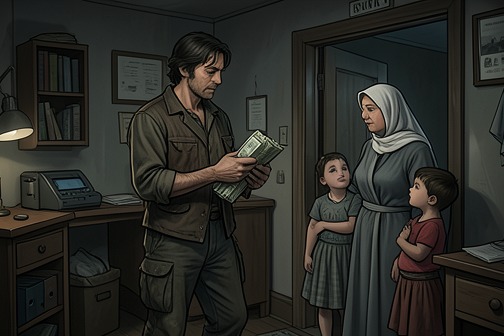
[Rafo Gives the Winnings to Marta](entity:event-recall-event-rafo-gives-the-winnings-951852217011) is the episode in which [Rafo](entity:character-recall-character-rafo-59c85cad733f) chooses to give away the money earned by [Macho](entity:character-recall-character-macho-1585ee3e81c9)’s cockfight victory. The choice sets his instinct for compassion against [Mike](entity:character-recall-character-mike-cb6fa8ab1468)’s suspicion and reluctance, then brings Rafo face to face with the difficult difference between helping a poor family and making its poverty feel like humiliation. [Marta](entity:character-recall-character-marta-1ae34ecb25bb) refuses the money, but Rafo leaves it inside her home; the scene’s quiet consequence is a first, tentative connection with her children.
## The winnings and the decision
After the fight, Rafo is putting the money into both trouser pockets when [Porfirio](entity:character-recall-character-porfirio-59f253f0d09e) interrupts. Asked what people he means, Porfirio identifies Marta as a widow with four children who comes on Saturday nights for the cockfight. The family, he says, lives from that animal. The winnings therefore acquire a human consequence: they are not only the reward for Macho’s victory but money that might help a household with four children.
Mike reacts as though Porfirio may be trying to cheat them. He is angry at the prospect of being taken in and tells Rafo to come along. Rafo does not follow. Without another word, he picks Macho up and runs past Mike, carrying the rooster as he heads out of the cul-de-sac. Mike chases him through the colonnade and catches him halfway down the hill. When Mike asks where he is going, Rafo answers, “To give her back her money.”
Mike insists the money is Rafo’s because his rooster won it. Rafo answers that Marta is poor, and, when Mike points out that they are poor too, repeats that she is a widow with four children. His decision is not based on an argument that the winnings do not belong to him; he knows they do. He acts because he sees another claim on them as more urgent. The exchange makes the gift a conflict between two immediate readings of the money: Mike sees earned property that should be kept, while Rafo sees a chance to relieve someone else’s need.
## A difficult approach
Walking downhill in the dark, Rafo realizes that he should have reached Marta’s house already. He admits to himself that he is not in a hurry. Part of him wants to turn back, apologize to Mike for the argument, and return to the familiar company he has just left. Still, he resolves to do what feels right and give the money to the widow.
The house complicates that resolve. Porfirio had described a poor family, but the white adobe house has a clean, unadorned appearance, blackberry and gooseberry vines, a purple-grape arbor, and a separate jacal. These details make Rafo doubt his first judgment. He wonders whether Mike was right and Porfirio might be working with Marta to cheat them. Rather than approach with certainty, Rafo reaches her door carrying his doubts alongside the money.
When Marta opens the door, the kerosene lamp behind her keeps Rafo from seeing her face clearly. Neither speaks at first. Although he is surer in Spanish and this is Marta’s language, he begins in English, stops in embarrassment, and tries again in Spanish. He cannot finish explaining what he wants to give her. He extends his hand with the pesos and manages only, “Aquí—por favor—aquí.” The halting offer makes the exchange more than a transfer of money: Rafo is trying to communicate care across uncertainty, with neither fluent words nor confidence that his judgment is right.
## Refusal and proof of need
Marta thanks Rafo but rejects the gift. He pleads with her, yet she closes the door. At first, he takes her refusal as evidence that he had been right to trust her: she has not taken the money, so Porfirio’s account of her must also be true. That conclusion leads him back inside, where the material conditions of the family’s life are unmistakable.
The furniture is sparse, and all four children sleep in a single room. The baby, perhaps two years old, lies on a mat of cornhusks; the two middle children, a boy and a girl, sleep on hard slats raised only a few inches above the dirt floor. The oldest daughter, about nine or ten, is awake and restless. The contrast between the house’s tidy exterior and the crowded sleeping arrangements explains why Rafo had doubted the story, then confirms why he felt compelled to help.
Marta’s refusal is not presented as proof that she does not need the money. Standing by the kerosene lamp, she touches her hands together and draws them apart, caught between pride and poverty: she is unwilling to accept charity, yet unable to escape the degradation of need. She interrupts Rafo and tells him to go away, accusing him of making matters worse rather than helping. Rafo answers with careful reasons instead of another impulsive gesture. His calm persuasion unsettles her; she begins speaking in half sentences, trembles, and runs outside. He follows only to the threshold, watches her disappear around the jacal, and resists the impulse to pursue her.
## The money left behind
Alone in the stuffy room, with the windows tightly shut, Rafo does not know whether to leave or wait. He looks at the money and decides to leave it. At the table, he arranges the pesos together and the centavos together, then heads for the door without realizing that Marta’s oldest daughter is watching. The gesture preserves the purpose of his visit while avoiding another attempt to force Marta to accept the gift face to face.
The girl thanks him. Rafo answers, “De nada.” She thanks him again, this time demanding a response, and then orders him to give his name. Her directness changes the encounter’s scale: the gift has not resolved Marta’s discomfort or erased the family’s hardship, but it has been seen and acknowledged by one of the children. Rafo’s attention also shifts from the money to the people in the room.
Soon afterward, he picks up the crying baby. He holds the child close, then cradles and rocks him; the baby screams, quiets while Rafo rocks, and cries again when the motion stops. Rafo keeps rocking, and eventually the baby remains still even when he does. The older girl watches with wonder, and Rafo catches the same bashful light in her eyes. Remembering his earlier insult about country people, he wishes he had not said it. The sequence ends not with a declaration that the money has been accepted, but with Rafo physically caring for one of the children. His gift has moved from an argument about who owns the winnings to a fragile, immediate act of human closeness.
Event 19
Rafo rides the chestnut mustang
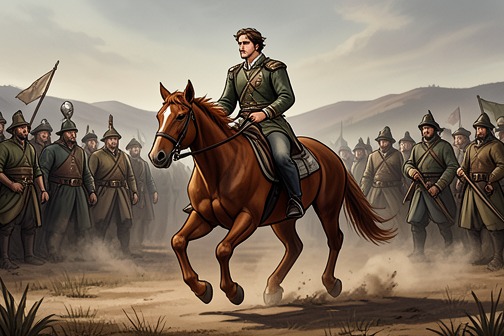
[Rafo rides the chestnut mustang](entity:event-recall-event-rafo-rides-the-chestnut-c386423c8bd4) in [Janasco](entity:location-recall-location-janasco-173a394c3e1f) after a dispute over whether [Mike](entity:character-recall-character-mike-cb6fa8ab1468)’s wild horses can be sold as rideable animals threatens to cost Mike and [Rafo](entity:character-recall-character-rafo-59c85cad733f) a buyer. Rafo’s sustained ride turns an argument he cannot settle with words into a public demonstration: [Jiménez](entity:character-recall-character-jim-nez-36ec8321e456) agrees to buy the horse, and Mike responds to the boy’s success with an embrace and shared laughter. The episode advances Rafo’s role in their work while complicating Mike’s conflict with [Porfirio](entity:character-recall-character-porfirio-59f253f0d09e), who had opposed the sale but shows a measure of respect after witnessing the ride.
## Background and Stakes
That afternoon, Mike and Rafo had obtained another mustang, a chestnut horse. They took it to Jiménez, but he refused to buy it. The refusal followed an argument among Jiménez, Porfirio, and Rafo outside the blacksmith’s forge. Mike, who did not understand what the others were arguing about, initially had no way to know why the sale had failed. The scene leaves him dependent on what they say and do rather than on a shared language.
When Porfirio turns back to Mike, he braces himself as if ready to face a fight, but says plainly that the failure is his fault. He explains that he has sold Jiménez horses for years and spends weeks making them tame enough for someone to ride. In his view, Mike’s horses are too wild to sell: a buyer who could not ride them would lose money. Porfirio has told Jiménez this, and Jiménez’s refusal follows. Mike objects that he has ridden his own horses, but Porfirio dismisses that as inconclusive: Mike might be a capable rider, or simply reckless. The disagreement is therefore not only about the horse’s sale price; it concerns what counts as proof that a mustang can be made rideable.
## The Ride
The argument ends when a shout from outside draws the men into the street. At first Mike thinks the chestnut has escaped. Instead, he sees Rafo riding it. The horse runs about a hundred yards, stops, rears, bucks, and runs again. It makes three circuits around the alameda, while Rafo stays seated and keeps control throughout. The demonstration answers Porfirio’s challenge in the terms that matter to Jiménez: the horse is wild, but Rafo can ride it.
Mike and Jiménez both react to the sight. Mike calls for Rafo to come back, praising what he has achieved and telling him to return. Once the horse comes back, Rafo gets down without waiting for help. Mike takes hold of him and embraces him; when they part, they laugh and strike one another once, then repeat the gesture several times. Their exchange gives the proof an emotional consequence as well as a practical one: Mike’s approval is expressed directly, and Rafo is so happy that he feels he can hardly stand it.
## Sale and Confrontation
The men go inside to collect two hundred pesos. The ride has changed Jiménez’s decision, and Mike understands from the trader’s shouting that he will buy the chestnut. The sale confirms that Rafo’s performance has met the immediate test, turning a failed transaction into earnings for Mike and Rafo.
Porfirio is waiting outside when they return. He removes his cigarette, beckons Mike over, and points to the chestnut before raising six fingers and saying the number in Spanish. The gesture follows the successful sale but does not erase the argument that preceded it. Mike does not want to continue fighting with him. He also recognizes something in Porfirio that he respects, and answers in a conciliatory way rather than pressing the victory into another quarrel. The episode thus ends with a settlement of the immediate business, not with a full reconciliation or a resolution of their competing judgments about the horses.
## Significance
The ride shifts the balance of the scene through action. Porfirio has the authority of experience as a horse seller; Mike has his own confidence in his riding; Jiménez controls whether the horse will be bought. Rafo’s demonstration supplies evidence that none of those positions alone could provide. The result advances the group’s horse-selling work and shows Rafo contributing a skill that changes the outcome rather than merely accompanying Mike.
The scene also reframes the cowboy’s mastery of a wild horse. Elsewhere, Mike’s public identity is tied to a stadium poster and the spectacle of rodeo performance, where the rider is presented as a star. Here, the ride takes place on a street in a dispute over whether an animal can be sold, and its value is measured in a buyer’s decision and two hundred pesos. The episode recalls the novel’s interest in the gap between heroic images of riding and the practical, uncertain labor behind them. For Mike, Rafo’s success is not simply a display of daring: it brings the boy close, wins him visible approval, and helps resolve a concrete conflict without making the conflict disappear.